Healthy plants don’t grow alone. Beneath every thriving garden is a living world of microbes, roots, fungi, and organic matter working together to build resilient soil, support biodiversity, and steward water well.
This page may contain affiliate links. Please read my disclosure for more info.
If your plants look tired, stressed, or less productive than they should, the answer may not be another fertilizer or a different variety.
It may be what’s happening below ground.
Some of the most important gardening happens where we never see it. Beneath the mulch, around the roots, and inside the dark crumb of good soil, an entire living world is at work. Bacteria, fungi, earthworms, arthropods, and roots are all feeding, loosening, storing, trading, and protecting. When that hidden system is thriving, plants are stronger, soil holds water better, and the whole garden becomes more resilient.
I have had to learn this lesson more than once. One of my former gardens sat where a swimming pool had been filled in with heavy clay, rocks, and chunks of old blue-painted concrete. In my current garden, part of the yard was compacted so badly during foundation repairs that the ground can still feel like concrete under a shovel. In both places, the problem was not just poor soil structure, but soil that was no longer hospitable to the life that makes a garden work.
To garden there at all, I had to start by making the soil welcoming to the invisible helpers again. I had to add organic matter, protect the surface, leave roots in place, and sometimes give the rebuilding process a gentle nudge with microbial support.
The goal of nurturing soil ecology is not a perfect garden. The goal is a stronger, more self-renewing one.
In this article:
- What living soil really means
- Why soil microbes matter so much
- How living soil supports water stewardship
- What harms soil biology
- 5 ways to build living soil in a home garden
- Choose clean amendments for living soil
- My favorite supplies for nurturing living soil
- What healthy living soil looks like
- Final thoughts
What living soil really means
Living soil is more than dirt with compost mixed in. It is a biologically active, ever-changing system made of roots, fungi, bacteria, organic matter, air, water, and all the tiny and visible creatures that keep those elements in motion.
Good soil feels different because it is different. It is softer, darker, and more crumbly. It absorbs water more readily and stays evenly moist longer. It supports roots instead of resisting them. It smells alive.
Healthy soil also has something else we do not always notice: space. Those little pockets between soil particles hold both water and air, which roots and beneficial soil organisms need in order to thrive. When soil is compacted or waterlogged, that air space disappears, and the whole underground community struggles.
This is where the idea of a permanent ecology becomes so helpful. The more we build a garden around lasting relationships between roots and microbes, mulch and moisture, diversity and resilience, the more stable the system becomes. Instead of resetting the garden every season with tilling in the spring and leaving soil bare and fallow over the winter, we can begin building something that strengthens with time.
Why soil microbes matter so much
Soil microbes are doing quiet work in every healthy garden. They help plants find water and nutrients, they strengthen the underground relationships that make biodiversity matter, and they play a role in how well plants handle stress. Here’s why that matters in every healthy garden.
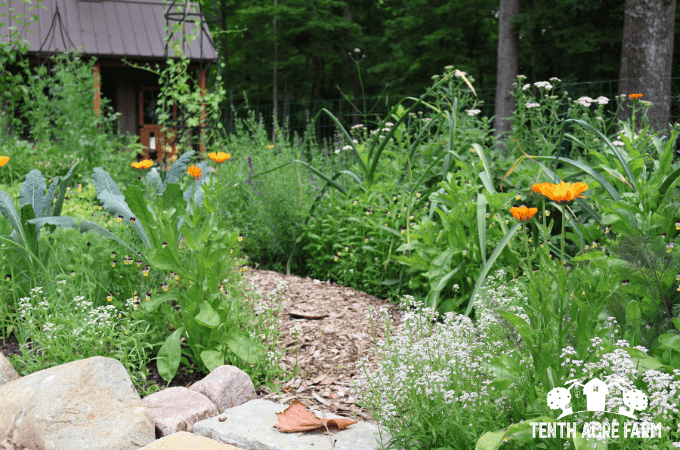
Biodiversity above ground helps nourish biodiversity below ground.
Soil microbes help plants access what they need
The narrow zone of soil around a root is called the rhizosphere, and it is one of the busiest places in the garden. Roots release sugars and other compounds into the soil that beneficial microbes feed on. In return, the microbes help unlock water and nutrients that plants could not reach as easily on their own. Fungi stretch outward in search of water and minerals. Bacteria help break organic matter down into forms plants can use. Soil life builds aggregates, those tiny crumbs of soil that hold air, water, nutrients, and life together.
Some fungi form especially close partnerships with roots. These mycorrhizal fungi extend the plant’s reach for water and minerals, while the plant feeds them sugars in return. That exchange is one of the clearest examples of how plants and soil life help one another thrive.
This is why healthy soil is about so much more than fertility. You can keep adding quick-acting fertilizers from above, and plants may respond for a while. But that is very different from building the kind of underground community that helps a garden stay steady through stress.
Soil biology influences how well plants can access nutrients. It influences how water moves through the ground. It influences whether soil crusts and hardens, or stays open and workable. It even affects how well plants handle stress.
In other words, microbes are not a side story. They are part of the main story of plant health.
Biodiversity strengthens soil biology
This is also where biodiversity becomes function. Different plants feed different microbes. Different root systems open different channels in the soil. Different leaves and stems return different kinds of organic matter to the surface. Diversity is not just something pretty happening above ground. It feeds the soil community below ground, and that living soil helps the whole system grow stronger in return.
When stressed plants reveal weak soil biology
This is also why I tend to think of many pest and disease problems as symptoms, not just stand-alone emergencies. When plants are stressed by compacted soil, poor drainage, uneven moisture, soil contaminants, or a weak soil ecology, they are often more vulnerable. Supporting soil life does not guarantee a pest-free garden, but it can help plants handle stress more easily and recover more gracefully.
That is the mindset behind preventing garden pests naturally.
How living soil supports water stewardship
Healthy soil is one of the best water-management tools we have.
When soil is rich in organic matter and alive with biological activity, it acts more like a sponge than a sealed surface. It absorbs rainfall more gently. It stores moisture more effectively. It releases that moisture more slowly back to plants. It softens the swing between too wet and too dry.
That matters in every garden, especially when the weather swings between hard rain and long dry spells.
Water stewardship does not begin with irrigation gadgets and rain tanks. It begins with the soil. Earthworks like swales, rain gardens, and contour beds offer more lasting benefits when paired with living soil that can welcome water. When we keep soil covered, grow roots as much of the year as possible, and reduce disturbance, we help the land capture, hold, and cycle water more wisely.
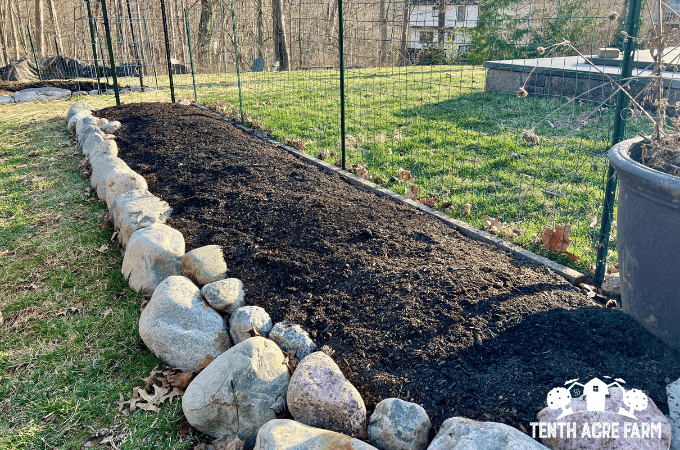
The soil in this new bed was improved with compost, biochar, and worm castings. It welcomes water like a sponge and provides healthy habitat for soil microbes.
If you’d like more ideas for improving biodiversity both above and below ground, I share many ideas in my award-winning book, The Suburban Micro-Farm.

What harms soil biology
Frequent tilling is one of the quickest ways to interrupt the underground system. It breaks fungal networks, disturbs soil aggregates, and exposes protected soil life to heat, air, and disruption.
Bare soil is another problem. Without cover, the surface dries more quickly, erodes more easily, and becomes more vulnerable to temperature swings. Heavy rain hits harder. Moisture evaporates faster. Soil life loses its shelter.
Compaction and waterlogging reduce the air space that roots and beneficial organisms need. When living soil cannot breathe, it becomes much harder to maintain.
Fast-acting fertilizers and questionable soil inputs can also work against the long-term relationships that make soil function well. They may green things up quickly, but quick results are not the same as lasting health.
And when the soil ecology is repeatedly disrupted, the garden often shows us above-ground symptoms: weaker growth and greater pressure from pests and disease.
If our goal is a more resilient garden, we have to think beyond quick responses and start thinking about what builds the ecology.
5 ways to build living soil in a home garden
These are the five practices I return to most often when I want to rebuild living soil.
1. Add compost to build living soil
If living soil needs food and habitat, compost offers both.
Compost adds organic matter, improves soil structure, helps moderate moisture swings, and feeds the soil food web. It is not just a nutrient input. It is one of the gentlest ways to build the whole underground system at once. Compost applications can increase soil microbial activity and diversity while also improving water-holding capacity and aggregate stability.
In practical terms, this might mean top-dressing beds in spring, adding compost after a heavy-feeding crop, or refreshing tired beds in fall before winter settles in. In new beds, repeated additions help bring life back to soil that has been compacted, neglected, or stripped of organic matter.
This matters for plant health above ground, too. Compost helps rebuild the kind of biologically rich soil that helps plants recover better from stress.
Homemade compost is especially powerful because it turns the leftovers of your own landscape into future fertility. Leaves, trimmings, kitchen scraps, and garden debris all become part of the cycle. This is the kind of loop that makes a garden feel less extractive and more alive.
Here are six ways to build a compost bin.
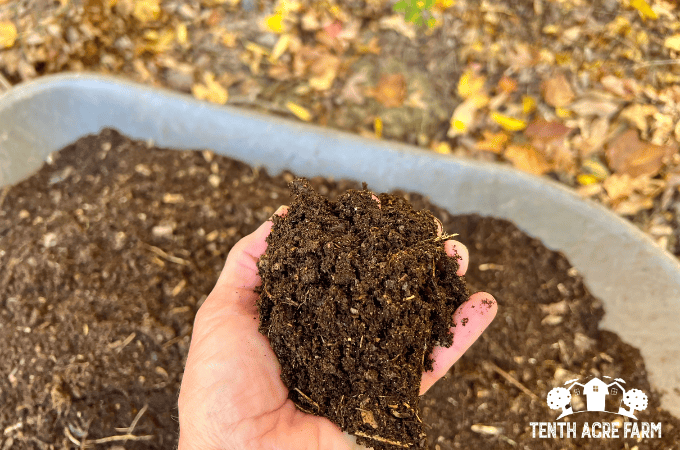
Homemade compost turns your kitchen, yard, and garden waste into a microbially rich amendment.
2. Disturb the soil less
One of the kindest things we can do for soil is leave it alone more often.
Less disturbance gives fungal networks, worm channels, and soil aggregates time to develop and persist. It allows roots and microbes to keep their relationships intact. It preserves the hidden architecture that makes soil airy, crumbly, and absorbent. A global meta-analysis found that conservation (low) tillage increased overall soil microbial biomass by 37%, including 31% more fungal biomass and 11% more bacterial biomass, with especially strong benefits in no-till systems.
For many gardeners, this begins with a simple shift in mindset. Instead of treating soil like something we need to constantly turn, loosen, and reset, we begin treating it like habitat.
In practice, that can mean building permanent beds and staying off them. It can mean using a digging fork or broadfork to loosen compacted soil rather than flipping it.
And if you are creating a new bed from scratch, it can mean sheet mulching rather than digging everything up: aerate first if compaction is severe, lay overlapping cardboard, then add generous layers of compost and other organic matter on top. It is slower than brute force, but much friendlier to the life you are trying to encourage.
No-till gardening is not really about doing nothing. It is about protecting what nature is already building.
3. Keep roots in the ground
This small habit has a surprisingly big effect.
When a crop is finished, cut it at the base instead of pulling it up by the roots. Those roots become food for soil organisms as they decompose. They also leave behind channels that help water, air, worms, and future roots move more easily through the soil. Oregon State Extension specifically recommends cutting plants at the soil line and leaving roots in place for this reason.
Roots are not just anchors. They are part of the living structure of the garden.
This is especially important if you are trying to rebuild compacted or lifeless soil. Every root left in place adds organic matter below ground and helps keep the soil food web connected. The next crop planted nearby benefits from what came before.
This is one of those practices that feels almost too simple to matter. But over time, it helps create the kind of stable, biologically rich soil we’re after. For heavily compacted soil, consider planting clay-busting plants that fight compaction and watch the soil ecology improve from year to year.
4. Grow living roots as much of the year as possible
If compost feeds the soil in pulses, living roots feed it steadily.
Soil microbes need living plant roots during both warm and cool seasons, and the roots of perennials, grasses, and cover crops can keep supporting soil microbes through much of the winter.
As soil ecologist Dr. Christine Jones writes, “Building soil carbon requires green plants and soil microbes.” That matters because living plants draw carbon from the air and send some of it below ground, where microbes help turn it into the sponge-like structure, steady fertility, and moisture-holding capacity that healthy soil depends on.
This is why cover crops, perennials, living mulches, and layered plantings are so valuable. They keep the underground community supplied with what it needs instead of leaving it hungry through long stretches of bare, fallow soil.
Living roots also help with water stewardship. Cover crop root systems create channels that improve infiltration, allowing more rain to soak into the soil.
This is where permanent ecology and biodiversity overlap. The more roots, layers, and plant relationships we keep in place, the more stable the system becomes.
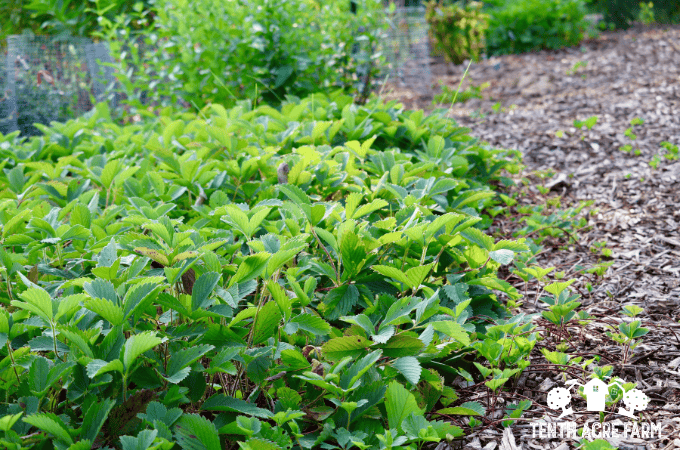
Wild strawberry (Fragaria virginiana) is a vigorous, North American native that can grow as a living mulch or ground cover. Try it in pathways or under fruit trees and berry bushes for sweet treats and healthier ecology above and below ground.
5. Mulch with intention
Mulch is not just for weed control.
Done well, mulch protects the soil surface, softens the impact of rain, slows evaporation, reduces erosion, and creates habitat for soil life. It is one of the simplest tools for both living soil and water stewardship. Mulch can increase soil organic matter, help maintain soil moisture, moderate soil temperatures, and increase soil microbial activity.
But mulch is not one-size-fits-all.
A light compost mulch may be just right in spring when soils need to warm up and breathe. Leaves may be ideal under perennials and shrubs. Wood chips shine on paths, around some fruit trees, and in lower-maintenance perennial zones. A living mulch can be even better, especially where you want roots feeding the soil and flowers supporting pollinators at the same time.
The important thing is to mulch with awareness. In wet conditions, too much heavy mulch can hold excess moisture. In hot, dry periods, mulch can be a lifesaver. The question is not simply, “Should I mulch?” but rather, “What will bring soil, air, and water into better balance here?”
Here are five types of mulch to consider.
The five living soil practices above do most of the heavy lifting. But when soil is tired or damaged, the right amendments and microbial supports can help rebuild the ecology below ground.
Choose clean amendments for living soil
If I had to build a garden around one amendment, it would be compost.
But sometimes poor or damaged soil needs a little extra help. Different amendments do different kinds of work. What I look for are materials that build moisture, structure, and soil life.
Leaf mold: gentle fungal support
Leaf mold is simply deciduous leaves that have broken down, mostly through fungal activity, into a dark, crumbly amendment. It is one of the gentlest materials I know: earthy, moisture-holding, and deeply friendly to the soil life we’re trying to build. Research on leaf mold compost found improvements in soil biological properties, and it supported greater populations of a beneficial fungus (Trichoderma) in soil. In that same study, disease severity was lower in leaf mold compost-amended plots in the second year. Leaf mold also helps hold soil moisture.
Worm castings: a biologically rich amendment
Worm castings (also called vermicompost) are the finished product of worms digesting food scraps and other organic matter. Worm castings may not look flashy, but they are one of the richest small-batch amendments we can make at home. One review showed that vermicompost has high microbial activity that can enhance soil biodiversity. In other words, worm castings do more than add nutrients. They help support the living soil community that makes a healthier, more resilient garden possible.
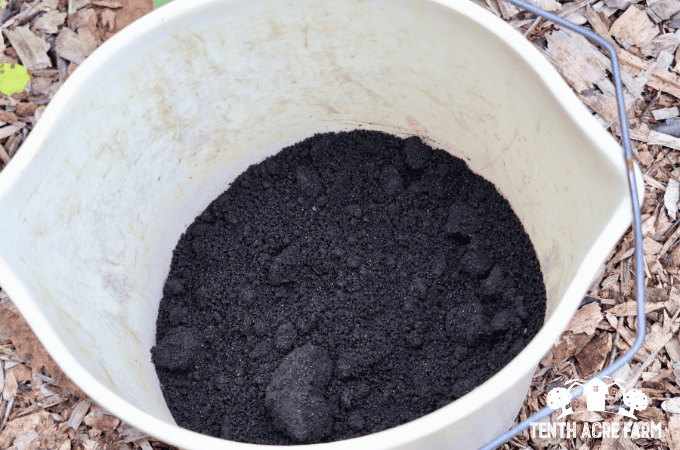
Worm castings are a biologically rich amendment. Even a small amount of castings can help support microbial activity.
Biochar: structure for the soil community
Biochar is a stable, carbon-rich form of charcoal made by heating biomass with very little oxygen. I think of it less as food and more as structure. Because it is highly porous, it can create sheltered habitat for microorganisms, help stabilize soil aggregates, and improve some of the conditions that support microbial diversity. Research reviews suggest that these physical and biological effects are part of why biochar can be helpful in compacted or biologically thin soil, especially when paired with compost.
Microbial inoculants: supplemental support for living soil
Microbial inoculants are products that introduce or encourage beneficial soil organisms, including mycorrhizal fungi and other microbial communities, usually in either powdered or liquid form. I think of them as supportive, not foundational.
Mycorrhizal inoculants are usually used at planting time, when new roots need help making connections.
Liquid microbial inoculants, by contrast, are typically used as optional ongoing support in stressed or recently disturbed soil. Their benefits are more context-dependent, but they may help encourage biological activity while the larger ecology is being rebuilt.
The key is proportion: they do not replace compost, living roots, mulch, or patience. They work best as companions to a rebuilding ecology, not substitutes for one.
Choose amendments with care
That said, not all amendments are beneficial. Oregon State Extension warns that persistent herbicides can survive the composting process, contaminating compost, manure, hay, grass clippings, or soil mixes and injuring sensitive crops.
This is why “organic” is not always enough as a filter. Many people look for bagged products that are OMRI listed (i.e., approved for organic agriculture), but that does not protect against herbicide contamination. The better question is whether an amendment supports the long-term health of the soil ecosystem.
That means asking questions before buying, knowing your sources when possible, and favoring materials that build carbon, biology, and structure over cheap bulk inputs that may quietly damage the very ecology you are trying to create.
My favorite supplies for nurturing living soil
These are some of the soil-improving companions I reach for most often when I am rebuilding structure, feeding soil life, or giving plants a little extra support. They are not the foundation of living soil, but they can be useful allies alongside compost, mulch, living roots, and patience.
- Digging fork: I use a digging fork to loosen compacted soil and improve air space without flipping the soil over. Here is my favorite digging fork.
- Edible flowers living mulch: This edible flowers seed mix from Botanical Interests makes a beautiful living mulch in the spring or a useful cover crop when sown in late summer for fall and winter. This seed mix includes some of my favorite flowers for the vegetable garden including calendula and borage.
- Worm castings: I use these as a concentrated biological boost. When I need more than I make on my own, these are the worm castings that I buy.
- Biochar: I use this to add structure and sheltered habitat for microorganisms. Here is the biochar that I use in my garden.
- Mycorrhizal powder: I use this at planting time, when new roots need help making connections. Here is the mycorrhizal powder that I use.
- Liquid microbial inoculant: I use this as ongoing support in recovering soil. Here is the liquid inoculant that I use most frequently.
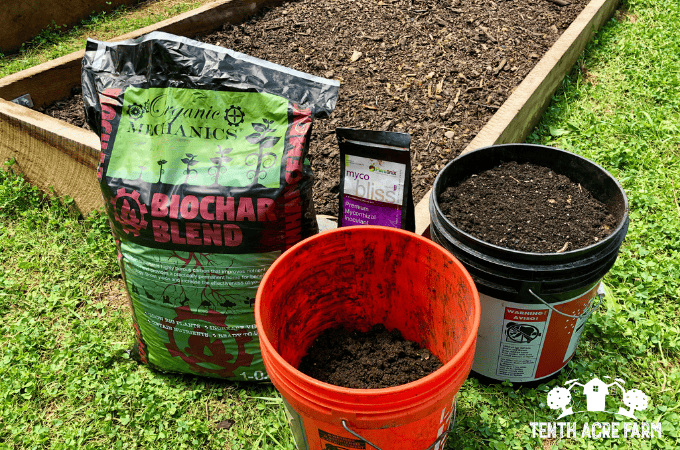
These are a few of my favorite inputs for nurturing living soil: biochar, mycorrhizal powder, homemade compost, and worm castings. I use them in new beds to jumpstart the soil ecology, and in established beds as an occasional refresher.
What healthy living soil looks like
You do not need a microscope to see progress.
Healthy living soil usually gets darker, softer, and easier to work. It holds moisture longer without staying swampy. You may notice more worms, less crusting, deeper root growth, better recovery after dry spells, and plants that handle stress more easily.
You may also notice that the garden is less prone to stress and less needy.
That is the quiet gift of living soil.
The goal is not perfection above ground. The goal is resilience from the soil up.
Final thoughts
The hidden life of soil is not a side story in the garden. It is the foundation story.
When we build living soil, we are building a permanent ecology—one that supports biodiversity, holds water more wisely, and helps the whole garden function better over time.
Instead of asking only what to add, we begin asking what kind of ecology would help this space hold together better. What roots belong here? What cover does the soil need? What relationships are missing?
What is one way you could support the life in your soil this season?
Read Next:
- 5 Types of Mulch for the Permaculture Garden
- How to Get Started with No-Till Gardening
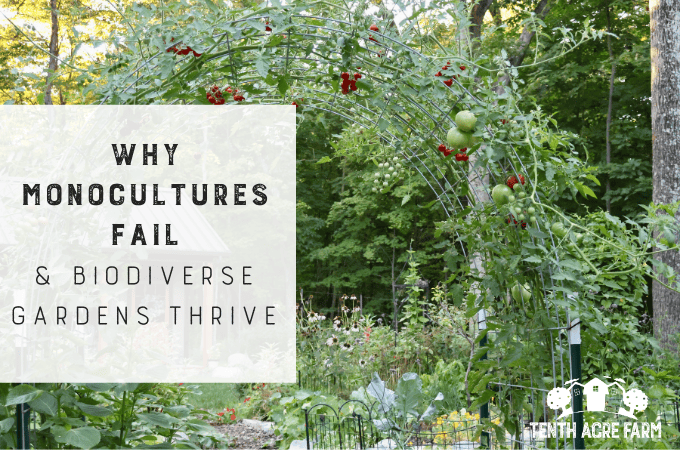
- Why Monocultures Fail and Biodiverse Gardens Thrive




Leave a Reply