When planning a garden, we’re often looking for ways to grow more of our favorite crops or get a bigger harvest from the space we have.
Maybe we’d like to grow a few more peppers, herbs, or flowers. Interplanting—growing different kinds of plants together—can help us make better use of that space.
This page may contain affiliate links. Please read my disclosure for more info.
Think about cucumbers, for example. If you let the vines sprawl across the ground, they can take up a surprising amount of room. But if you train them up a trellis, you’ll have space in the bed for more plants. A fruit tree offers another opportunity. Instead of creating an empty circle of mulch around it, you might be able to grow a few edible shrubs, herbs, or ground covers, depending on the sunlight.
I like this approach because it offers more than extra harvests. Thoughtful interplanting can help protect the soil, provide flowers for pollinators, and bring more of nature’s diversity into the garden. And you don’t need a large food forest or an elaborate plan to try it.
Table of Contents
- Why Try Interplanting in Layers?
- What Food Forests Teach Us
- Start With the Garden You Have
- How to Start Interplanting in Layers
- Two Examples From My Garden
- Simple Interplanting Ideas to Try
- Frequently Asked Questions
Why Try Interplanting in Layers?
Of course, I want good harvests, but that’s not the only thing I look for in a planting. I like having flowers mixed in with my vegetables. Some herbs can be left to bloom for pollinators, and where there’s room, low-growing plants can help protect the soil.
The advantage isn’t necessarily a bigger harvest from any one crop. Sometimes it’s getting a second harvest from the same bed. By choosing plants that use space differently, we can fit more kinds of crops into the garden without expanding it.
A mix of plants can also give beneficial insects and other wildlife more places to find food and shelter. That’s one reason I encourage biodiversity in the garden.
What Food Forests Teach Us
A food forest is one of my favorite examples of how plants can grow in layers. The concept takes inspiration from a sunny forest edge, where taller trees bend toward the sun over smaller trees and shrubs, with herbs, flowers, and ground covers growing where there’s enough light. Vines may climb among the taller plants, while the roots of all the plants intermingle and spread throughout the soil below.
In a shady hedgerow in my yard, edible serviceberry shrubs grow behind golden alexanders (Zizia aurea)—a native herb with edible young flower buds (eaten like broccoli) and yellow flowers that attract beneficial insects. Both plants have room to occupy different heights.
Food forest diagrams often show seven layers. I find it more useful to notice how plants use sunlight and space as they mature, and to add new layers where it makes sense.
A food forest usually develops around perennial plants over time. Interplanting can also work in an annual vegetable bed. My article about creating a permaculture food forest explores the larger approach. Here, we’re borrowing its layering ideas for the garden you already have.
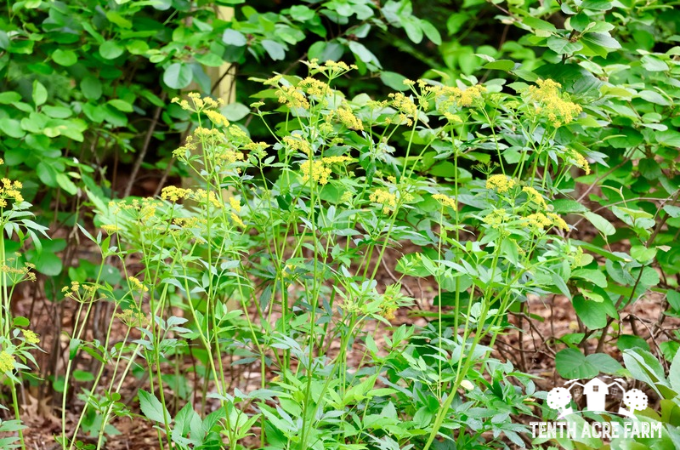
Edible serviceberry shrubs grow behind golden alexanders—a native herb with yellow flowers and edible spring growth.
Start With the Garden You Have
Before shopping for more plants, spend a little time looking at what’s already growing and how the space behaves.
One corner might stay damp after rain while another dries out quickly. Sunlight can change throughout the season, too. A bed that’s sunny in early spring may become shaded once the trees leaf out, while a fence can reflect heat onto one area and cast shade on another.
In permaculture, observation comes before action, especially when plants share space. Notice where light falls, where water collects, and how you move through the area to harvest. Also check how large your plants will become.
Once you get to know the space a little better, it’s easier to see where another plant might fit. Just remember that a spot with plenty of room in spring may look very different by midsummer.
How to Start Interplanting in Layers
1. Make Room for More Than One Harvest
Garlic goes into the ground in fall, but that doesn’t mean the space between the rows has to sit empty all spring. Try adding lettuce and Swiss chard between the garlic plants. You’ll harvest the lettuce first, followed by the garlic in early summer. Meanwhile, the Swiss chard has more room to spread and can keep producing throughout the season.
2. Choose Plants With More Than One Use
I grow cilantro and calendula among my cabbage-family crops rather than keeping the herbs and flowers in separate beds. I harvest cilantro for cooking, but once it bolts, I can leave some to flower for beneficial insects. Calendula provides more flowers to harvest for herbal preparations. It doesn’t guarantee a pest-free garden, but it is one way I work to prevent pests naturally.
Borage is another useful plant. I grow it for its edible flowers and the insects they attract, but I can also cut back some of the leafy growth and leave it on the soil as mulch. I sometimes call plants like these “super plants” because they do more than one job.
Of course, not every plant has to be multipurpose. Growing a flower simply because you love it is a good reason, too. Give the taller herbs and flowers enough room that they don’t crowd the crops you’re trying to harvest.
3. Use Edible Ground Covers
In one part of my garden that gets four to five hours of sun, I’ve grown sweet potatoes with ground cherries and edible balsam flowers. The sweet potato vines spread across the soil, while the ground cherries produce fruit that falls to the ground in papery husks when ripe. Balsam adds edible flowers that attract hummingbirds. Because the vines and ground cherry plants both spread, this combination needs plenty of room.
A smaller perennial planting might call for a very different ground cover, such as violets for edible leaves and flowers or thyme for culinary harvests, where conditions suit them. But not every bare spot needs another plant. If a living ground cover would compete with what’s already growing, chopped leaves, straw, or compost can help protect the soil instead.
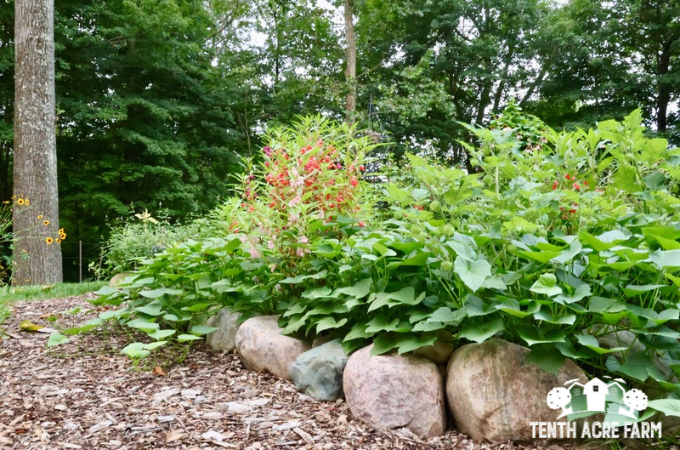
Sweet potato vines and ground cherry plants sprawl throughout this bed, producing edible tubers below ground and golden fruits above ground. Meanwhile, balsam flowers add colorful, edible blossoms that attract hummingbirds.
Two Examples From My Garden
My Tomato Bed
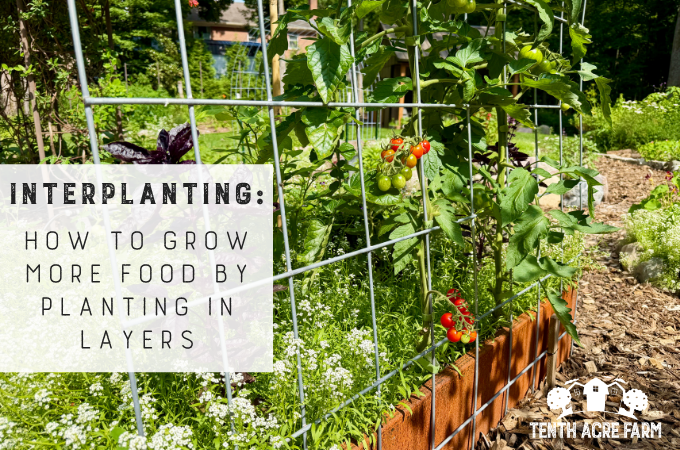
In one of my tomato beds, I grew basil, peppers, and Swiss chard alongside the tomatoes. Sweet alyssum grew as a living ground cover between them, protecting the soil while adding flowers for pollinators.
I planted the peppers farthest from the tomatoes so they’d have plenty of sunlight and room to grow. It was a high-yielding combination.
My Plum Tree Guild
In my backyard, I grow a plum tree with sorrel and sea kale, two perennial vegetables that provide leafy harvests. Yarrow offers medicinal potential, flowers for insects, and foliage I can cut back for mulch. Alpine strawberries and self-heal grow as ground covers, and other herbs fill out the planting.
I enjoy harvesting perennial greens and berries from beneath the tree, while other plants offer flowers, medicinal herbs, and material for mulch. As the plum tree grows and casts more shade, I watch how well its companions are doing and make adjustments as needed.
This is what I mean by a fruit tree guild: a central tree sharing space with plants that offer other harvests and ecological benefits. Your own guild might look quite different depending on the tree, sunlight, and soil you have.
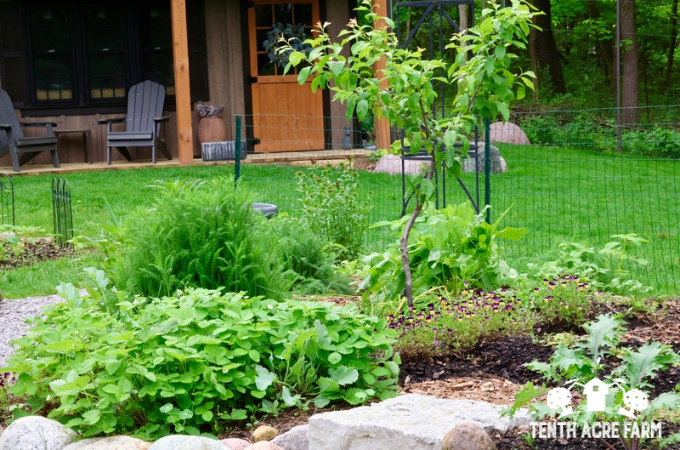
My young plum tree grows above leafy greens like sorrel, sea kale, and red Russian kale, alpine strawberries, edible Johnny jump-up flowers, and medicinal yarrow and self-heal.
Simple Interplanting Ideas to Try
Here are a few other combinations worth considering:
- Grow beets with onions and collards, giving each crop room to mature.
- Add sage and yarrow beneath an airy aronia shrub, where there’s enough light and room for the herbs.
- Try flowering lemon balm near a gooseberry shrub where light and moisture suit both plants.
- Interplant cowpeas among other crops in an open, sunny vegetable bed for edible pods, flowers for insects, and vigorous roots that improve the soil. See my guide to clay-busting plants for more ideas.
I like to think of a productive garden as a series of small experiments that gradually begin to work together. Over time, those smaller plantings may become part of a larger edible landscape.
Frequently Asked Questions
Is interplanting the same as intercropping or mixed planting?
All three terms describe growing different plants together. Intercropping is commonly used in farming, while mixed planting is a broader term. I use interplanting to describe how I combine vegetables, herbs, flowers, and perennials in my garden.
Do I need every garden layer?
No. Two or three compatible crops can be plenty. Choose what suits your space rather than trying to fill every category.
Does interplanting mean planting closer together?
No. I still give plants room to grow. If an herb or ground cover will crowd its neighbor by midsummer, I’d rather give it another spot.
Can interplanting help pollinators?
Yes, especially when you include flowers that bloom at different times. For more ideas, see my favorite flowers to grow in the vegetable garden.
Ready to Grow With Nature?
If you’d like more ways to bring permaculture ideas into a vegetable garden, my mini guide, The Permaculture Inspired Vegetable Garden, explores practical approaches to healthy soil, helpful plant combinations, and productive growing spaces.
Read Next:
- Grow the Best Cucumbers with These 12 Steps
- How to Plant a Hedgerow
- All About Aronia: Grow Your Own Superfood Berries


Leave a Reply